
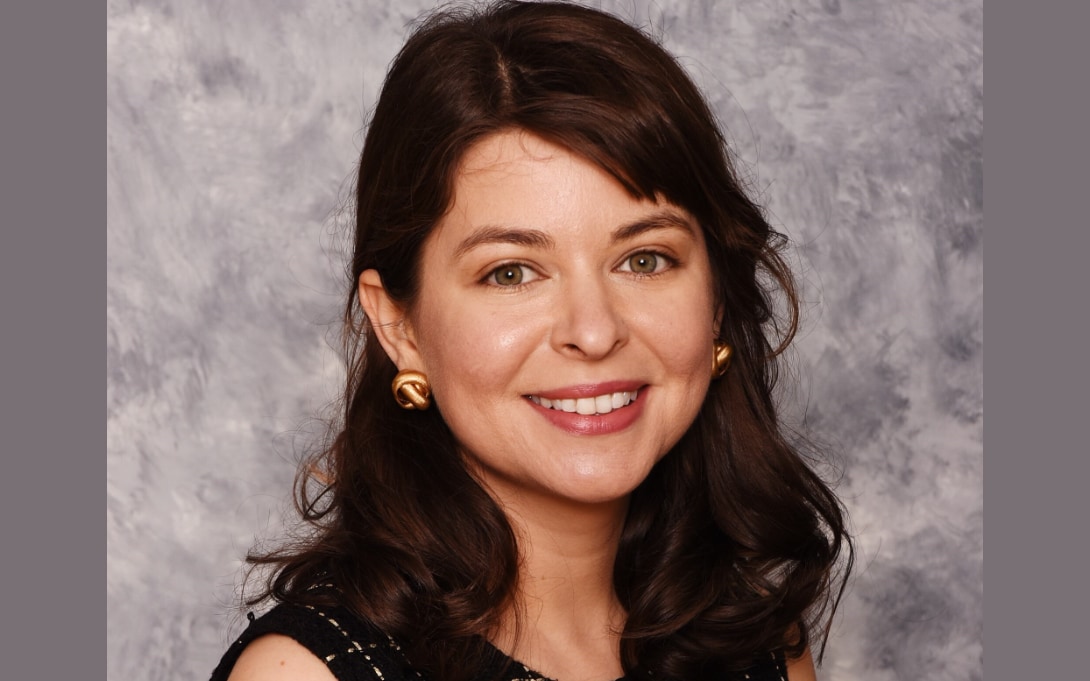
"When I describe my research, I say that I study love across borders and creative uses of technology," Ford School sociologist Kristina Fullerton Rico said on a recent episode of Grief'd Up. "Over the past 40 years, immigration policies have made it much harder for people to be together in person, but immigrants have persevered to stay connected to the people and places they love."
Fullerton Rico is a postdoctoral fellow at the Center for Racial Justice and has spent nine years conducting bi-national fieldwork in the United States and Mexico. She studies transnational grief, or how immigration policies that limit travel across borders impede families from caring for loved ones at the end of life or attending mourning rituals after death.
"[Undocumented] immigrants are aware of their loved ones aging and are aware of their own mortality, but most of the people I've met through my research have no way of adjusting their immigration status," she explained. "They can't get a green card, and without a green card, they can't travel to visit the people they love in the country that was their first home, so this fear of transnational death is with them for years before they actually experience it firsthand."
Fullerton Rico identified several ways people navigate this reality: providing financial support, asking relatives to represent them at funerals, or participating in mourning rituals virtually. While these strategies offer connection, they can also amplify what is missing, resulting in a form of grief that feels unresolved.
There are some things that you really cannot get from technology," she said. "We have these rituals that are designed not only to honor the life of somebody who has passed away, but to give us a sense of closure."
Undocumented immigrants often spend decades working in the United States, yet lack access to social safety net programs as they age. Many remain in the country and rely on family networks for support, while others return to their countries of origin and face the prospect of long-term separation from children or grandchildren who continue to live in the United States. Fullerton Rico emphasized that either path can involve significant emotional and relational loss.
"Our sense of love and loyalty to the people we love can lead us to be really creative and to maintain relationships and connections, even when on paper it might seem impossible to do so," she explained. "I hope that people who are less familiar with these experiences firsthand will question why things are the way they are…and that this moment pushes us to ask, is it fair for your birthplace to determine your destiny?"
More news from the Ford School